Beijing business park: peak-hour metro connections
Offices away from metro stations may need scheduled peak-hour shuttles. Check passenger volumes and safe stopping space before choosing a route and departure frequency.
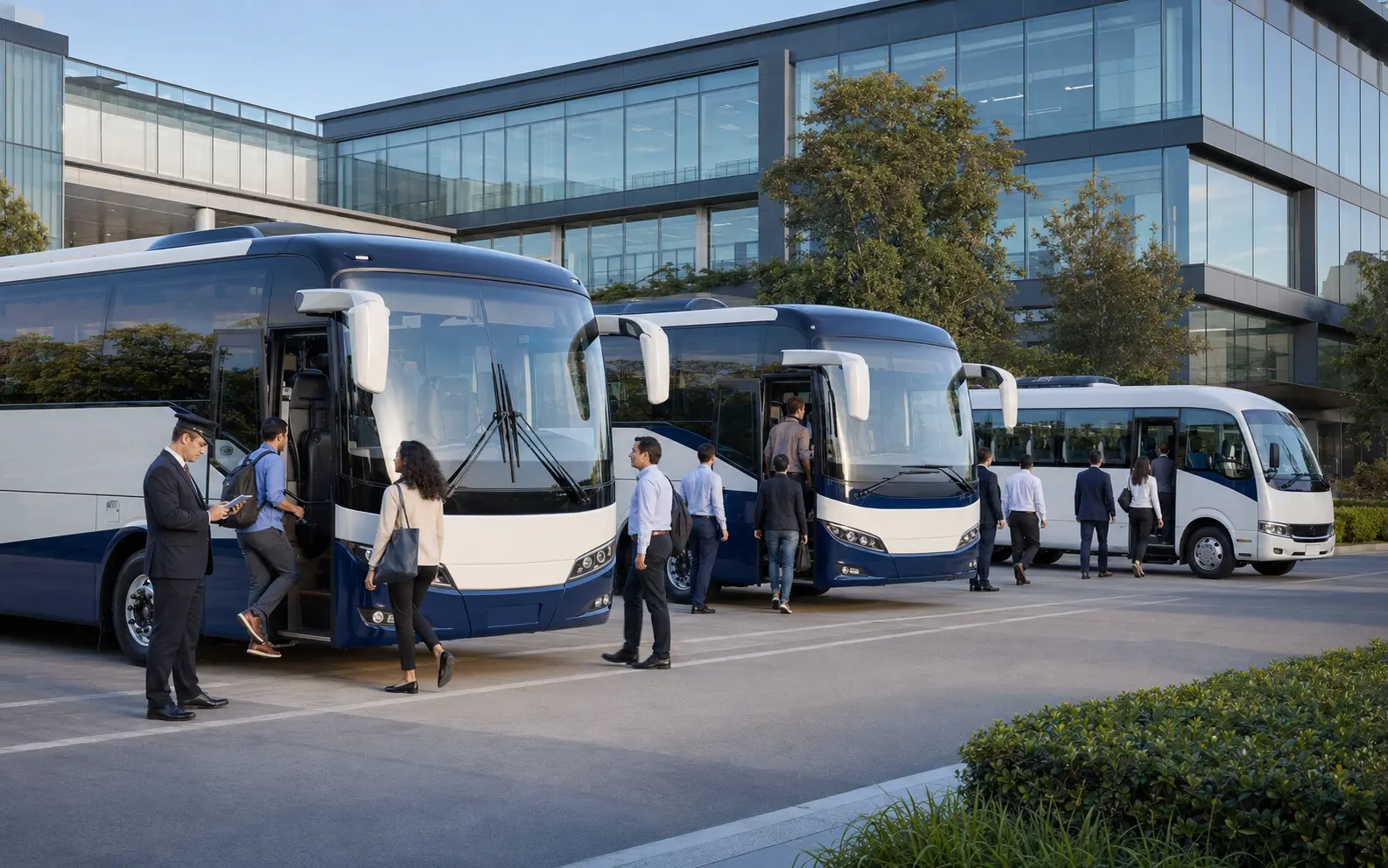
Background and operating challenge
An office park needs a connection to a metro station. Morning demand is concentrated while evening departures are spread out. The plan begins with permitted, safe boarding points and dwell times, then matches scheduled or circulating departures to demand.
Requirements to confirm
- Office location, station exit and permitted boarding areas.
- Peak periods, passenger numbers and acceptable waiting time.
- Weekend service, overtime trips and route-change approvals.
Vehicle selection and delivery plan
- Verify actual boarding points at the park and transit station; set scheduled or circulating routes.
- Match vehicles and departures to peak demand, including the last departure and overtime arrangements.
- Record completed trips and exceptions, then adjust capacity as demand changes.
- Track queues and occupancy during trial operation, then adjust departures by agreement; define last-service, wet-weather and overtime arrangements separately.
Vehicle configuration reference
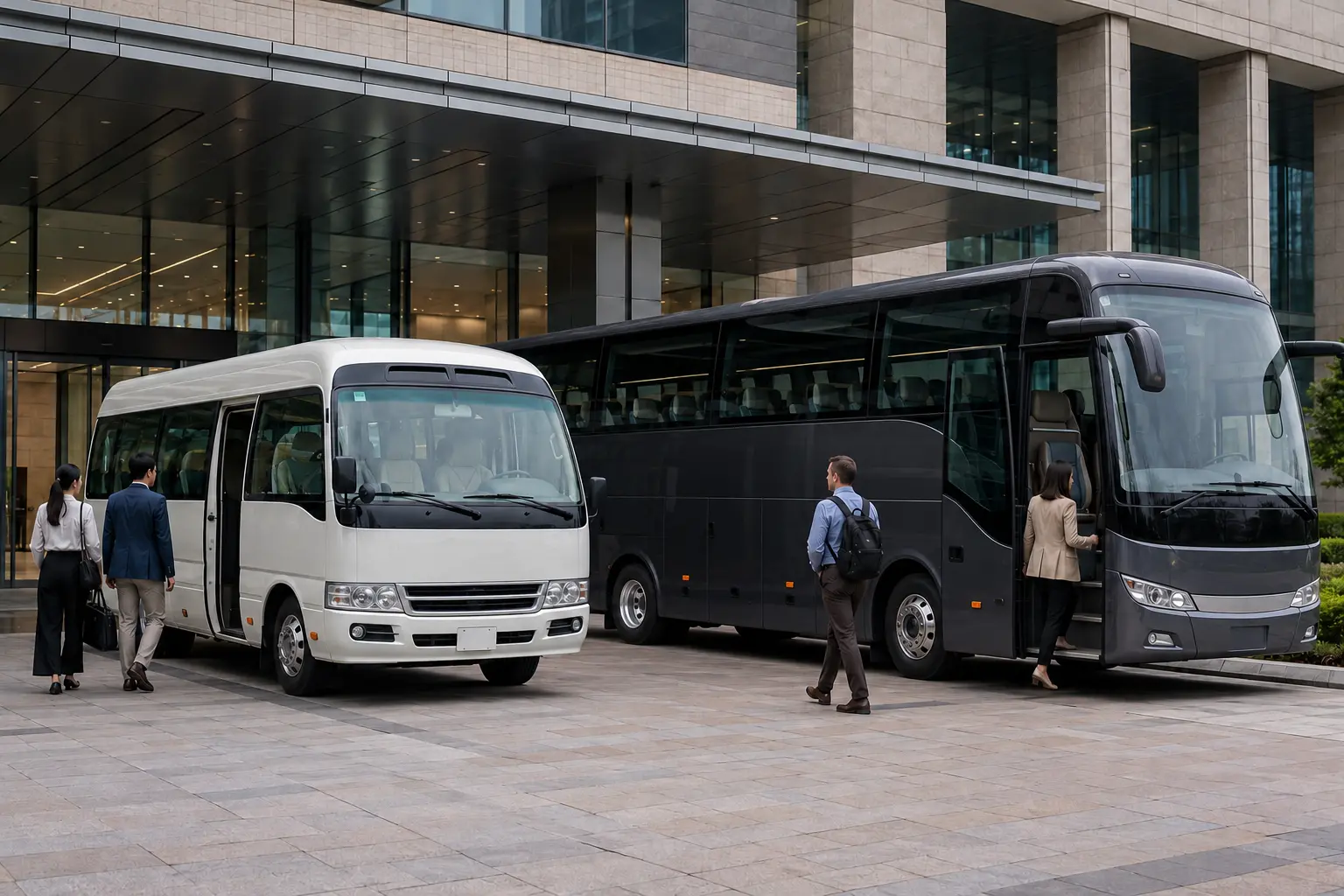

Images illustrate business settings and vehicle categories; they are not client-site photographs or confirmed delivery vehicles. Final allocation follows passenger, luggage, route and contract requirements.
Illustrative project
Project delivery workflow
- 01Verify station boarding points
- 02Plan peak departures
- 03Trial and record demand
- 04Adjust shuttle capacity
Deliverables and acceptance checks
Provide stop guidance, departure times and passenger instructions.
Record departures and peak demand to support capacity changes.
Check usable stops, orderly boarding and clear last-service information.